

Key Takeaways
- A memory screening is a quick, painless check of memory and thinking, not a diagnosis.
- Patterns of forgetfulness matter more than a single slip.
- Age, family history, and multiple warning signs may signal a need for memory screening.
- Early detection allows more time to plan and make decisions together.
- Memory care offers personalized plans, 24-hour staffing, and daily enrichment.
When to Check Your Loved One’s Memory?
You may notice a loved one repeating the same question or forgetting plans you recently discussed. These small changes can raise concerns about whether something more may be happening.
A memory screening can offer a helpful starting point for understanding common memory changes and identifying when further evaluation may be needed for peace of mind.
What a Memory Screening Really Is
A memory screening is a short, painless check of memory and thinking skills. It often takes just a few minutes. Your parent answers simple questions and completes small tasks, like recalling a list of words.
Here’s the part that brings relief. A screening is a first step, not a diagnosis. It won’t label anything. Instead, it acts as a filter, showing whether more testing could help you pin down the cause of short-term memory loss.
Think of it like a quick temperature check. It points you in a direction. From there, you and your loved one can decide what comes next, together and without pressure.
Normal Forgetfulness vs. Signs of Dementia
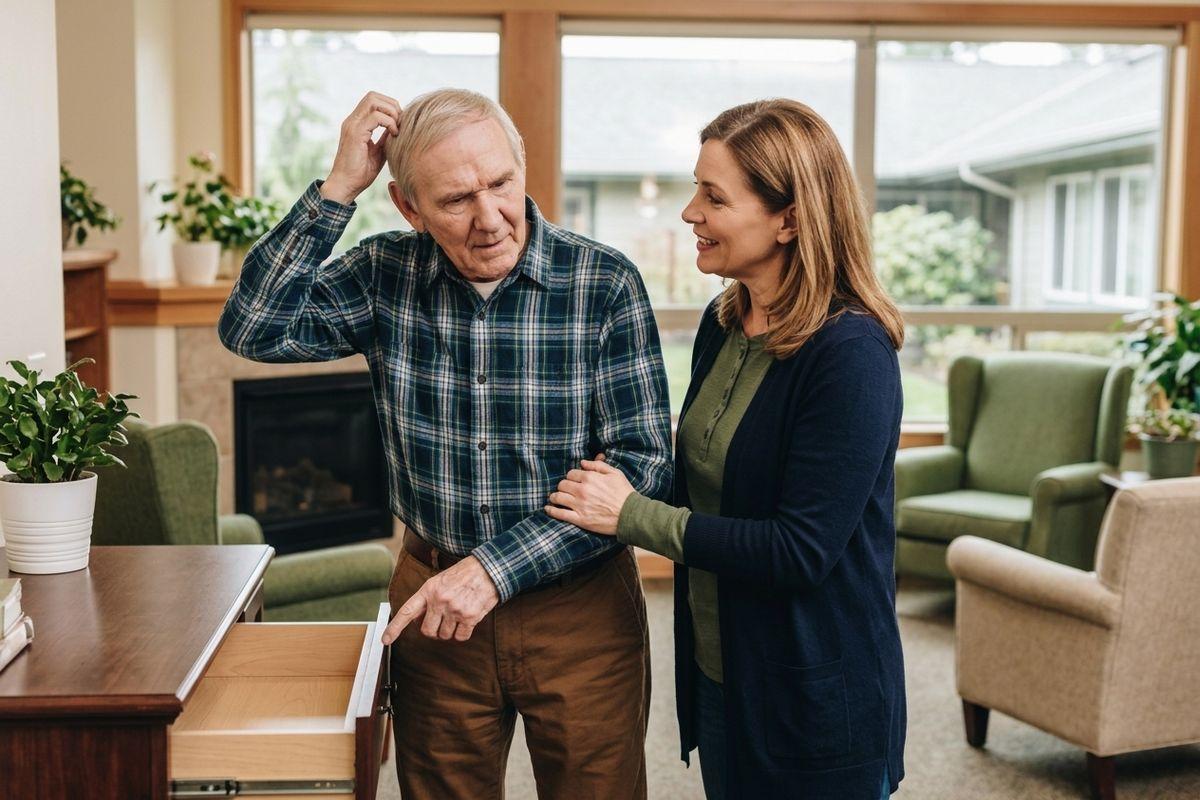
Everyone misplaces keys. Everyone blanks on a name now and then. That’s normal, and it usually isn’t cause for worry.
The difference shows up when forgetfulness disrupts daily life. Missing a payment once is human. Missing several, plus burning dinner and getting lost on a familiar route, points to a pattern. Patterns matter far more than one slip, and they can hint at one of the stages of dementia.
Very First Signs to Watch For
Some early memory changes may become more noticeable over time. A loved one might repeat questions, forget recent conversations or appointments, or have difficulty with familiar tasks such as cooking or paying bills.
They may also become confused in familiar places, such as their neighbourhood or a local store. One change on its own may not indicate a larger concern. Still, several changes together may align with the early warning signs of dementia and be worth discussing with a healthcare professional.
Mood & Personality Shifts
Memory changes don’t always start with memory. Sometimes you notice a shift in mood first. Your loved one might seem newly irritable, anxious, or flat and uninterested, which can overlap with depression in older adults.
Watch for pulling away, too. A parent who loved garden club or weekly card games might suddenly skip them. When someone withdraws from hobbies and friends, that change deserves your attention.
When to Consider a Screening
A memory screening may be worth considering when a loved one is over 65, has a family history of memory concerns, or begins showing several changes at the same time. Difficulty managing familiar daily routines may also signal that further evaluation could be helpful.
You don’t need to wait for significant changes before asking questions. If you or your loved one has concerns about memory, speaking with a healthcare professional can provide helpful guidance and a better understanding of what dementia is.
Keep Your Loved One’s Family History in Mind
Genes play a role, but they don’t decide everything. A family history can nudge the odds higher, yet it’s only one piece of a much bigger picture.
Lifestyle and health matter, too. Staying active, eating well, sleeping enough, and keeping the mind busy all shape the odds. Simple habits that support cognitive health in older adults carry real weight, right alongside their genes.
Why Early Detection Can Help
Addressing memory concerns early can give families more time to understand their options and plan for future needs. An early diagnosis may also allow a loved one to take an active role in decisions about healthcare, finances, and personal preferences.
Having more information can help families identify support before needs change further. It can also provide time to discuss priorities, ask questions, and make decisions together rather than waiting until more immediate support is needed.
How Memory Care Supports Your Loved One
When daily routines become more difficult, memory care can provide support based on each person’s needs, preferences, and history. Memory care may include personalized care plans, 24-hour staffing, secure spaces, outdoor areas, and daily activities that support engagement and connection.
Residents also receive individualized support in an environment designed with comfort and safety in mind. Daily routines and activities provide opportunities to stay involved while receiving assistance as needs change.
Next Steps & Peace of Mind
Start simple. Keep a written log of the changes you notice, including dates and details. This record helps you spot patterns and share clear notes with anyone who can help. It also helps you picture what to expect from memory care.
At Birchview Memory Care, families can learn more about the community and the support available for changing needs. Schedule a tour today to meet the team and see the community in person.