

Key Takeaways
- Watch for daily signs that point to a need for specialized care.
- Personalize the new space with familiar furniture and keepsakes.
- Share your loved one’s story so the care team can tailor each day.
- Give the adjustment several weeks and stay connected through morning visits.
Supporting Your Family Through Memory Care
You’ve noticed the missed meals, the repeated questions, and the late-night phone calls. Choosing memory care for a parent feels heavy, and you want the move to feel safe and kind.
You can make this transition easier by preparing early, personalizing the new space, sharing your loved one’s story, and leaning on a local team that handles the hard parts with you. Understanding when to choose memory care can also help you ask the right questions.
What to Know Before the Move
Small changes often add up before you realize it. Maybe your mom forgets to take her medication. Maybe your dad gets lost on a route he has driven for years. These moments signal that daily life needs more support than home can offer.
Memory care is built differently than other senior living options. The spaces are easy to navigate, secure, and designed for adults living with dementia, Alzheimer’s, or Parkinson’s. Staff work around the clock, and daily routines keep residents active and engaged.
Start the conversation with the care team early. Ask questions, share concerns, and let them guide you. The sooner you connect, the smoother the whole process may feel.
How to Prepare for Move-In Day
A little planning ahead can turn a stressful day into a calm one. These 3 steps help you and your loved one feel ready.
Finding the Right Words
Choose a short, reassuring phrase that feels natural to your family and use it consistently. Something as simple as, “This is a place where people are here to help you feel your best.” A familiar message can make an unfamiliar situation feel a little more comfortable.
When family members use the same gentle words, your loved one receives a clear, steady message. That consistency can help ease uncertainty and provide a sense of comfort during a time of change.
Pack & Personalize the Space
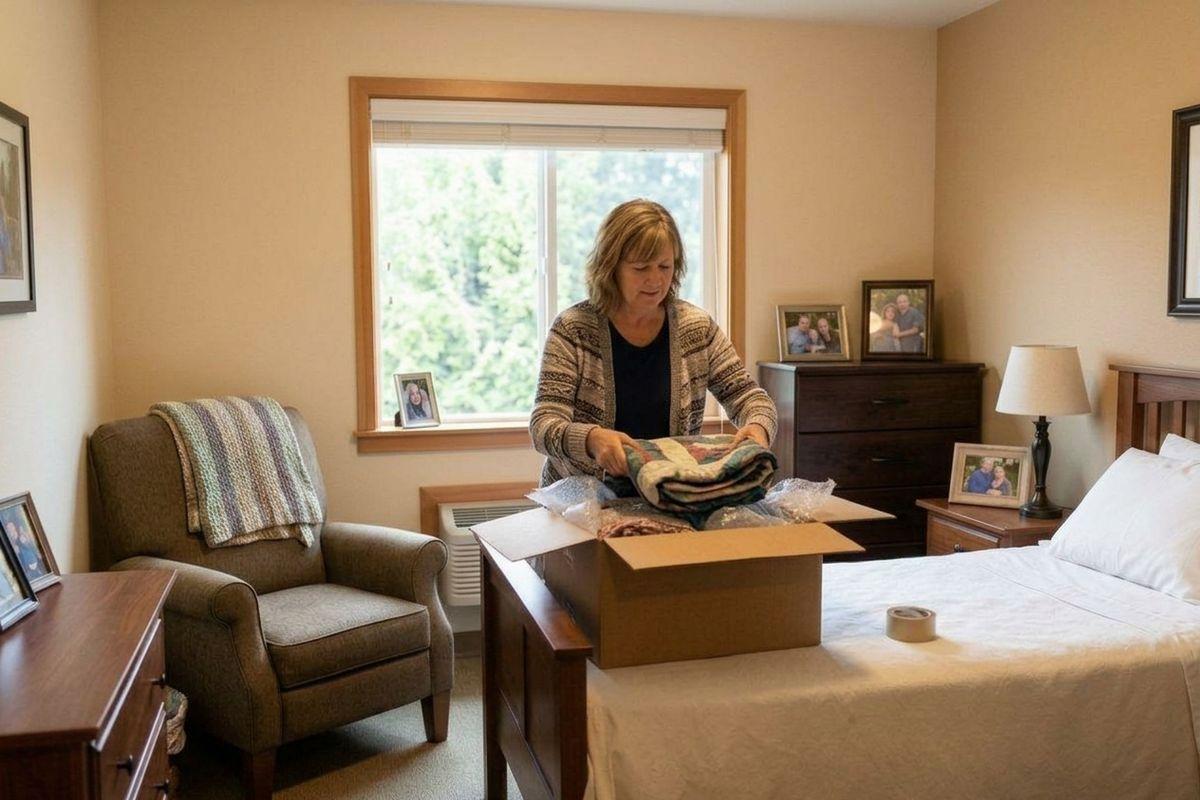
Familiar belongings can bring a sense of comfort when someone is adjusting to memory care. Consider what your loved one uses or enjoys each day, such as a favorite chair, quilt, or framed family photos. Packing while they rest and setting up the room before arrival can make the transition feel less overwhelming.
Small touches can make the new space feel more familiar. A well-loved blanket on the bed, a favorite book on the shelf, or other meaningful belongings can offer comfort during those first few days. Once everything is settled, taking empty boxes home can help keep the space calm and uncluttered.
Share Your Loved One’s Story
The care team wants to know the person, not just the schedule. Tell them about hobbies, quirks, and favorite routines. Maybe your loved one loves gardening, or a strong cup of coffee at sunrise.
These details help the team shape each day around what your loved one enjoys, from life enrichment activities to quiet afternoons. The more they know, the more personal daily life becomes.
How to Make Moving Day Go Smoothly
Familiar belongings can help your loved one feel more at ease in a new space. Think about the things they use and enjoy each day, such as a favorite chair, quilt, or family photos. Packing while they rest and setting up the room before they arrive can make the transition feel gentler.
Small touches can bring comfort during those first few days. A familiar blanket on the bed, a favorite book nearby, or a few meaningful belongings can make the space feel more like their own. Once they’re settled, you can take the empty boxes home and leave the room feeling calm and familiar.
How to Help Your Loved One Settle In
The first few weeks can take some getting used to as your loved one adjusts to a new place and routine. Your patience, reassurance, and familiar presence can help make the transition feel a little easier.
Stay Connected the Healthy Way
Visit in the morning when energy runs high and moods feel brighter. Mornings tend to bring calmer, happier moments for many residents.
Join the fun when you visit. Sit down for a meal, play a card game, or step into the secure courtyard for fresh air. Shared moments support strong social connection and keep your visits joyful.
Give the Adjustment Time
Settling into a new routine takes time, and it’s okay if the adjustment doesn’t happen right away. Give your loved one space to share how they’re feeling, stay flexible as new routines take shape, and allow some room for difficult days.
Keep in touch with the care team as your loved one settles in. Sharing updates, concerns, and changes can help everyone stay on the same page and make the transition feel a little less overwhelming.
How Families Find Peace of Mind in Sedro-Woolley
A familiar, thoughtfully designed space can make daily life feel more comfortable. Purpose-built spaces in the heart of Skagit Valley are easy to navigate, with a secure courtyard for enjoying fresh air and nearby Riverfront Park for supervised outings.
At Birchview Memory Care, families can learn about the support available as needs change, including respite care in Sedro-Woolley. The local team can answer questions, help with the transition, and support your loved one as they settle into a new routine. Schedule a tour today.